
Psychobox is a platform of interactive psychological tools for mental-health professionals — replacing the PDFs and printed worksheets therapists traditionally fill in by hand during sessions. Tools run in the browser: the therapist shares an individual link, and the client fills it in with no account and no login.
I designed the product end-to-end as the sole designer — from translating clinical knowledge into product requirements, through UX and brand identity, to building the no-code website and handing off the interactive tools for development. First version of Psychobox Creator shipped two weeks from brief.
Therapists worked with PDFs and printed worksheets, filled in by hand — in session or during online consultations. There was no digital-native way to run these exercises.
The product had to earn the confidence of two audiences at once: professionals trusting it with their methods, and clients trusting it with their answers.
These tools are used live, mid-conversation. Any UI hesitation interrupts the session — so smoothness wasn't polish, it was a functional requirement.
Psychobox's founder, a psychologist, came with a clear ask: redesign the printed and PDF worksheets therapists use — cleaner, easier to read, easier to work with. But therapy itself had already moved: sessions happen online, clients sit with laptops even in the office, and a younger generation expects digital-native tools. The real problem wasn't prettier PDFs.
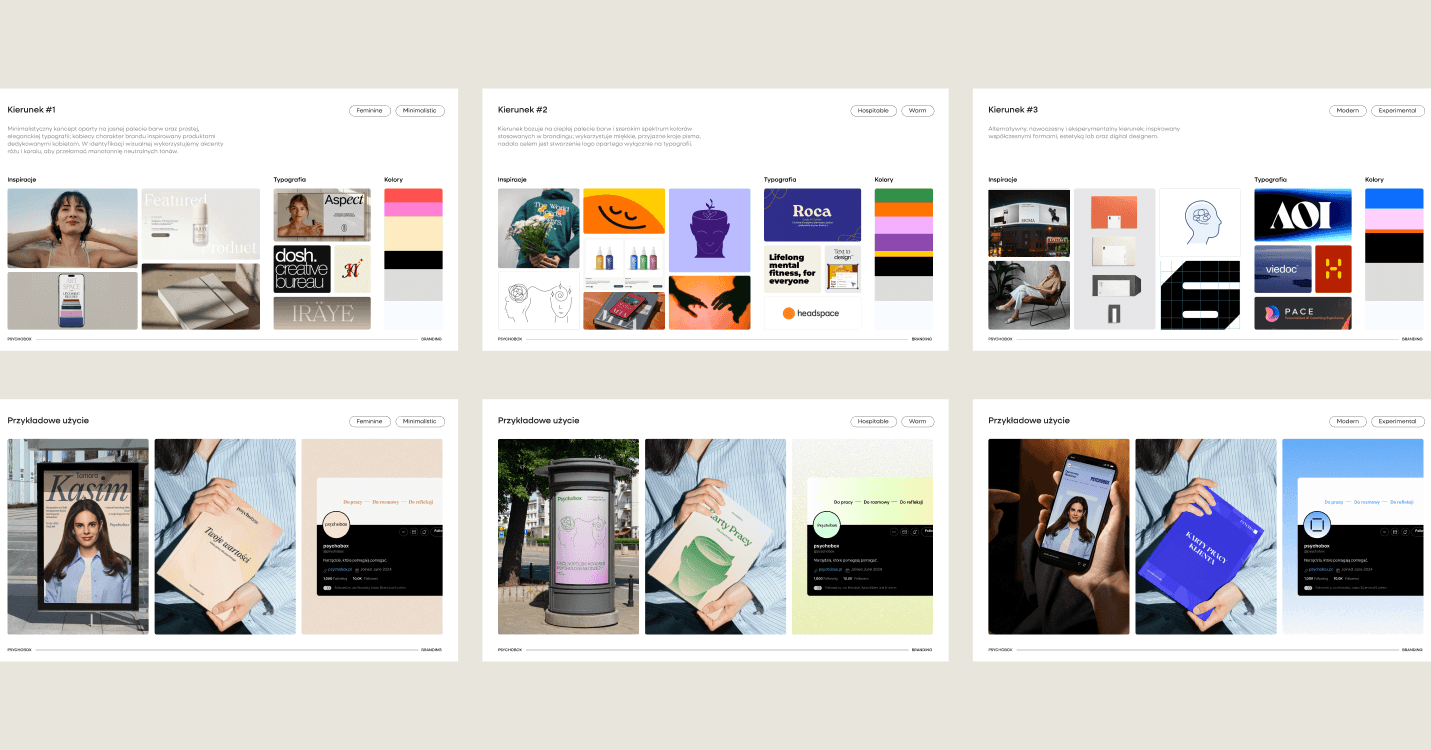
I explored three brand directions — feminine-minimal, warm-hospitable, modern-experimental — and turned the chosen one into a full identity and website. The landing went live early, collecting emails from interested therapists before the product existed: validation was running while the product was still being designed.
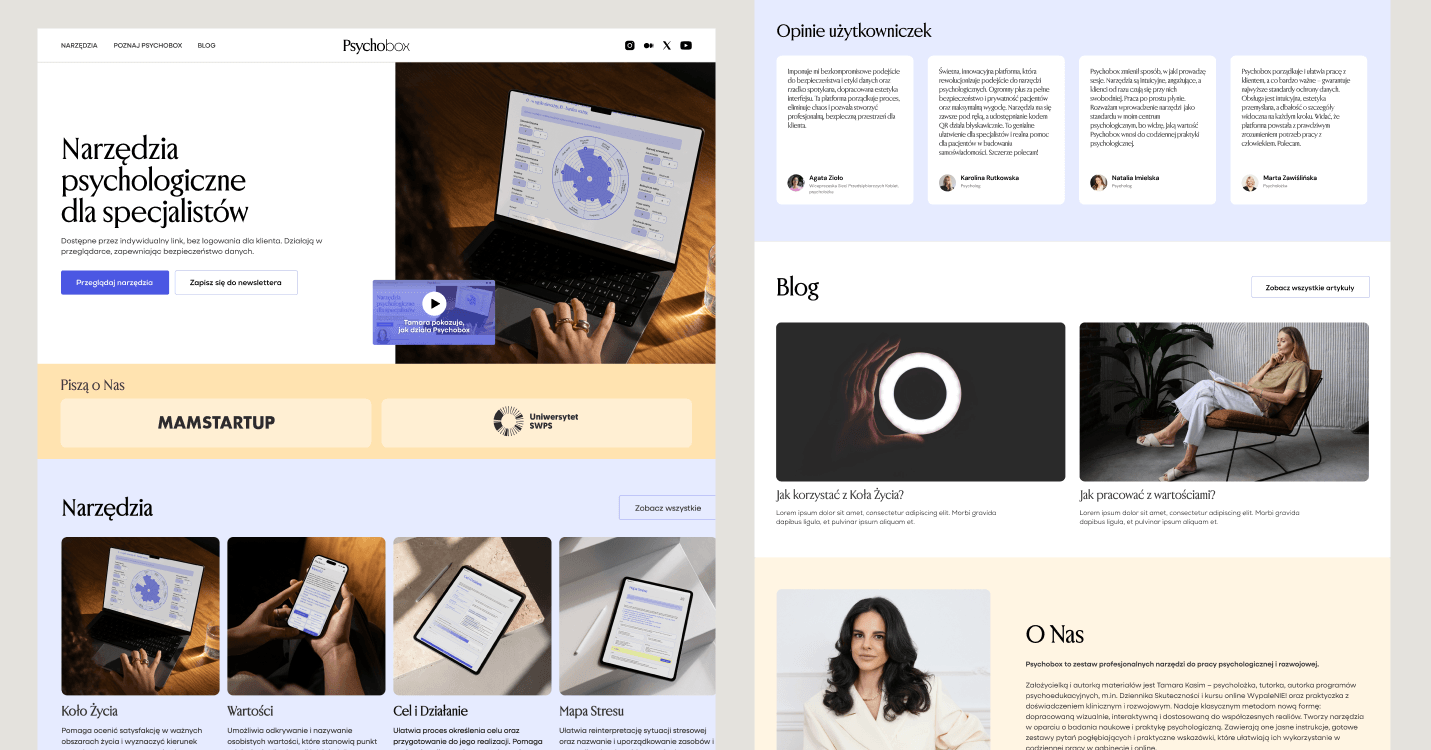
Mapping how therapists actually work — live online, in-office, and asynchronously between sessions — revealed a market gap: no simple, editable, user-friendly tools existed for online psychological work, the fastest-growing segment of the practice. We scoped a concept of five digital cards. I designed and built them no-code in Webflow — fast to ship, fast to test. Clients fill them in the browser, results render instantly as visuals.
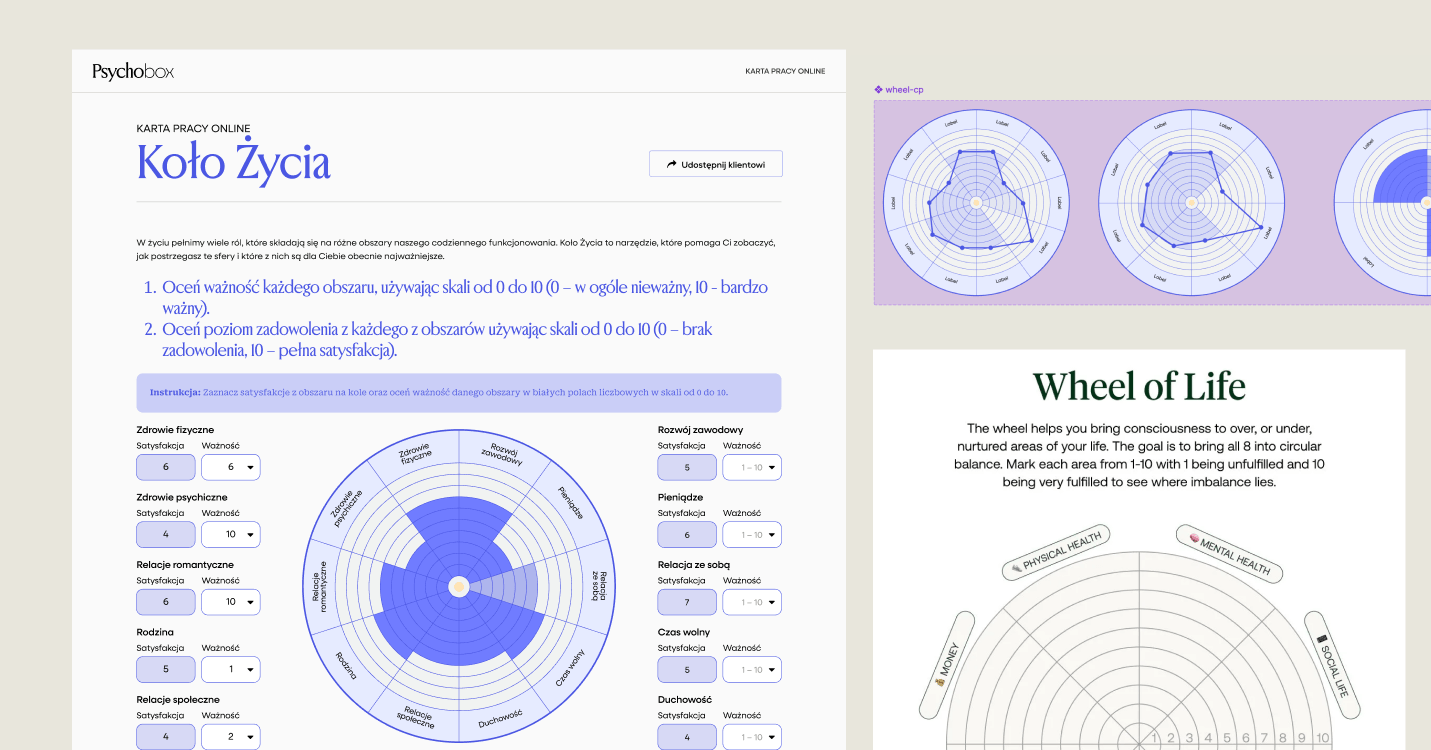
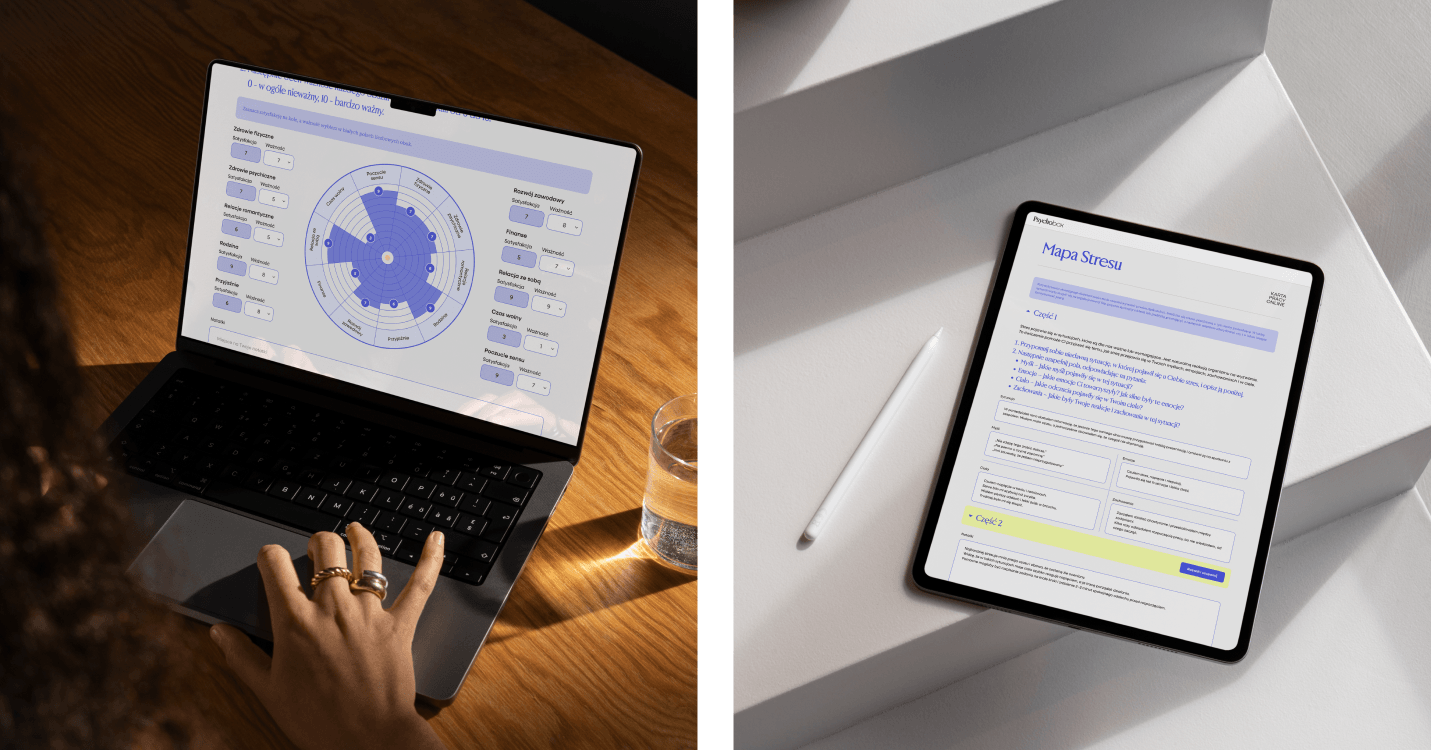
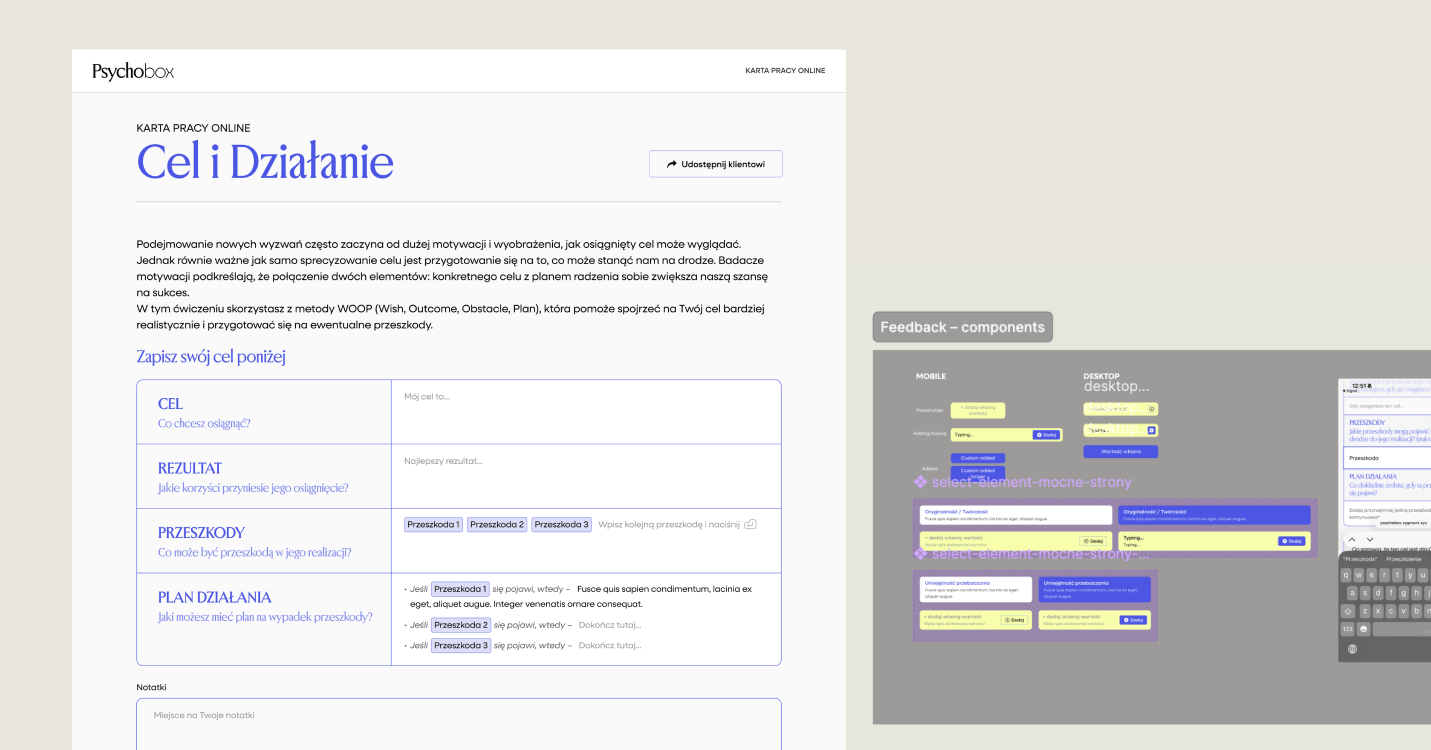
After user testing, the first psychologists started running real sessions on the tools — Stress Map and Wheel of Life quickly became the most used. On the back of that traction, the founder expanded the scope from cards to a full platform. A small dev team joined to build it with patient-data security at the core, and I moved into designing the platform, the product concept, and each next feature.
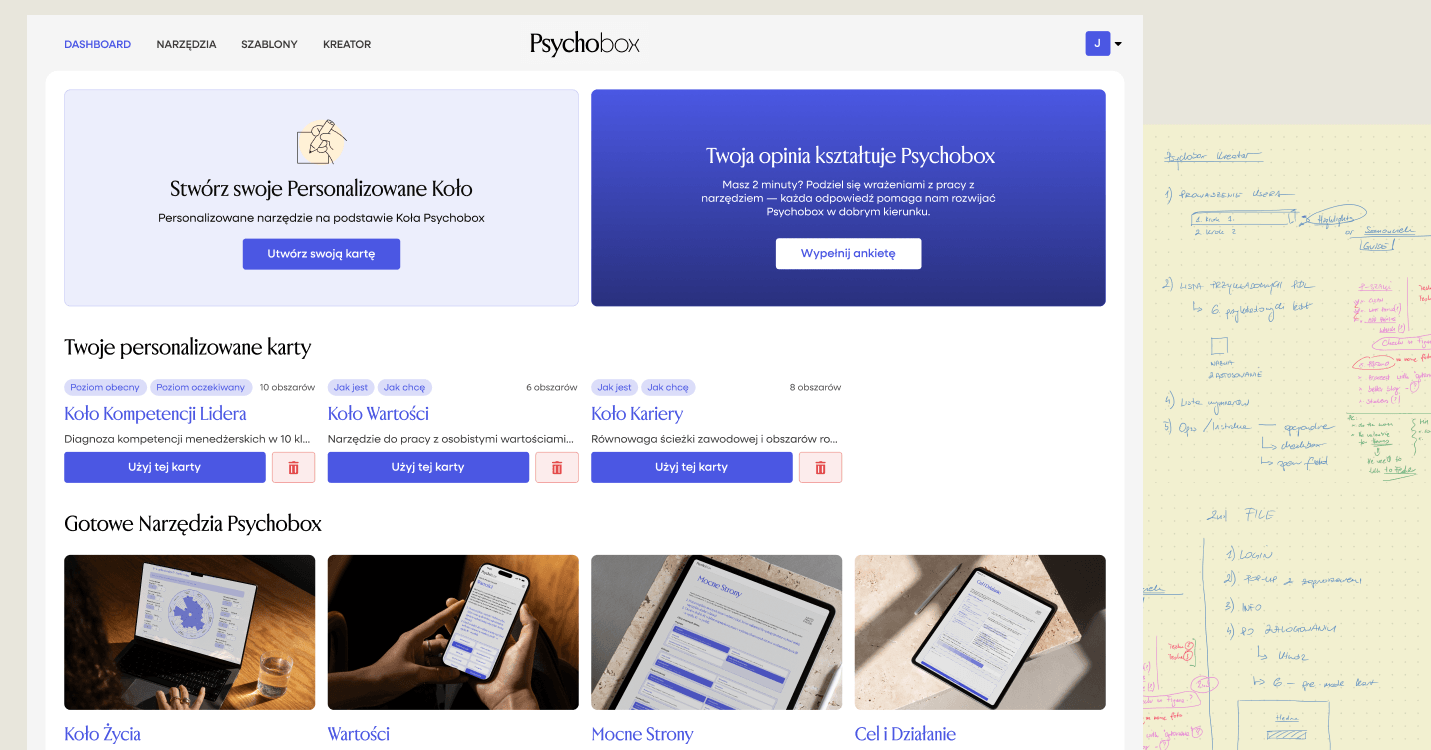
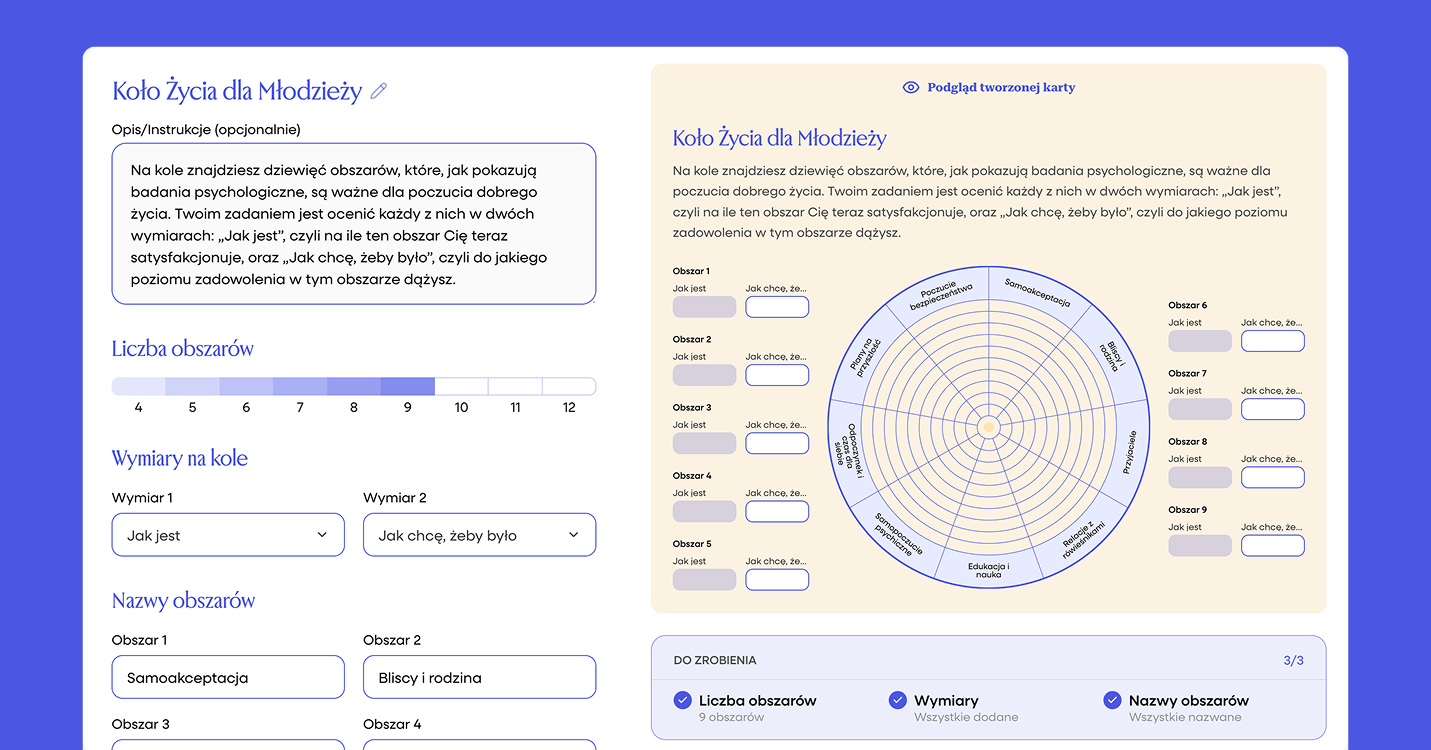
The most popular tool became a template: Creator lets psychologists and coaches assemble their own personalized wheel-based exercises — areas, dimensions, instructions — with a live preview, no code. The design challenge shifted from designing a flow to designing a system of constraints: what's fixed, what's configurable, and how to keep a therapist-made tool feeling as polished as ours. First version shipped two weeks from brief.
Psychobox is live and in daily use — therapists run real sessions on the tools, and build their own with Creator. From "nicer PDFs" to a digital product defining its niche.